
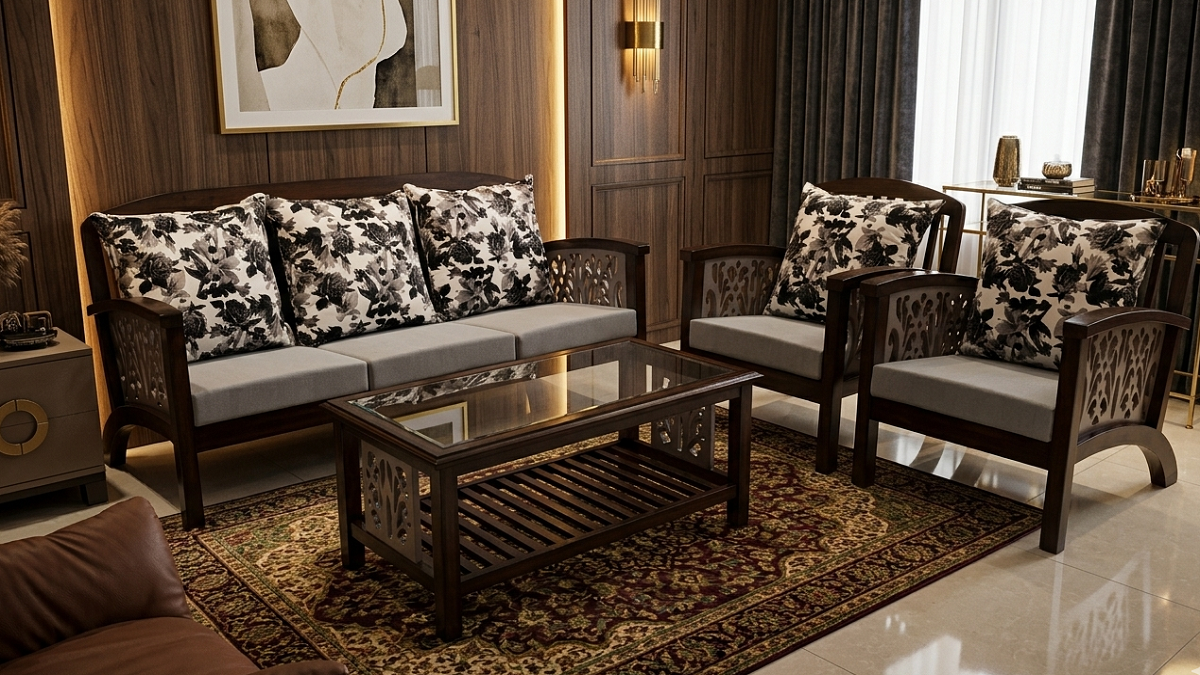
About this item
In the world of interior design, the quest for spaces that are both beautiful and functional is unending. One trend that has elegantly bridged the gap between traditional craftsmanship and modern minimalism is the Sofa Jaali.
A portmanteau of the English word “sofa” and the Hindi/Urdu word “jaali” (meaning net or lattice), the Sofa Jaali is a freestanding decorative screen or room divider placed behind a sofa. It serves as a contemporary alternative to the classic sofa table or a simple accent wall. More than just a decorative piece, it is a versatile design tool that adds depth, texture, and architectural interest to living spaces
 |
 |
Furniture House Group
# Address: [G-5, Kamla Nagar, Bypass Road, Agra, Uttar Pradesh, 282004]
# Contact: [+91 9758273215]
# Website: [furniturehousegroup.com]
# Open: Monday – Sunday, 10:00 AM to 8:00 PM
# Close: Tuesday
——————————————
The Roots of the Jaali Sofa
To understand the Sofa Jaali, one must first appreciate its origins. The jaali is an integral part of Indo-Islamic architecture, perfected over centuries in palaces, forts, and stepwells across the Indian subcontinent. Traditionally carved from stone or wood, these intricate lattice screens served multiple purposes: they allowed for passive cooling by channeling air flow, provided shade, offered privacy (allowing occupants to see out without being seen from the outside), and filtered light into mesmerizing patterns.
The Sofa Jaali is a modern distillation of this ancient concept. It takes the essence of the jaali—its ability to create division without obstruction—and adapts it for the contemporary living room.
Design Variations: A Material Journey
The beauty of the Sofa Jaali lies in its incredible adaptability. Designers and homeowners can choose from a variety of materials and styles to suit their aesthetic:
-
Wooden Jaali: The most popular and versatile option. From the warmth of teak and oak to the rich tones of mahogany, wooden jaalis can be carved with traditional jaali patterns like the chaukat (geometric) or paisley, or with clean, modern geometric grids. They add a sense of warmth, organic texture, and timeless elegance.
-
Metal Jaali: For a more industrial, modern, or glamorous look, metal jaalis are the go-to choice. Laser-cut steel, brass, or iron can achieve incredibly intricate patterns with precision. A matte black metal jali creates a bold, graphic statement, while a gold or brass finish adds a touch of luxury.
-
MDF (Medium-Density Fibreboard) with CNC Cutting: This is the most accessible and cost-effective option. MDF panels can be CNC-cut into virtually any design—from geometric patterns to floral motifs to abstract art. They are often painted in a contrasting color to the wall, turning the jali into a striking focal point.
-
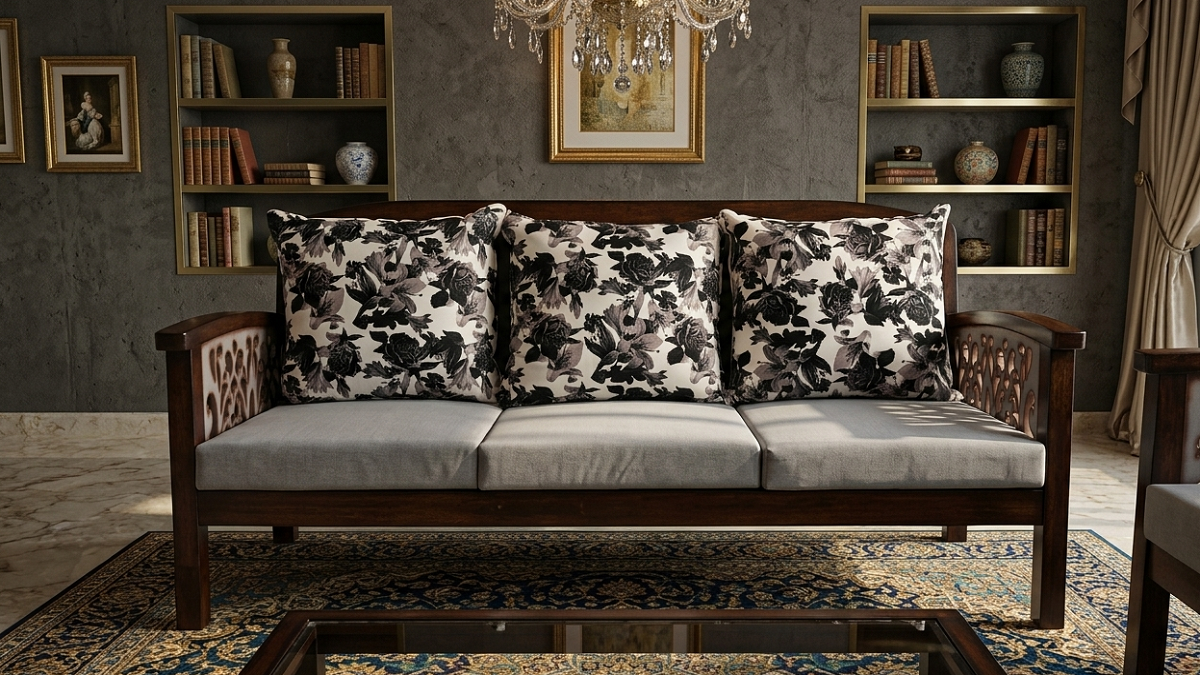
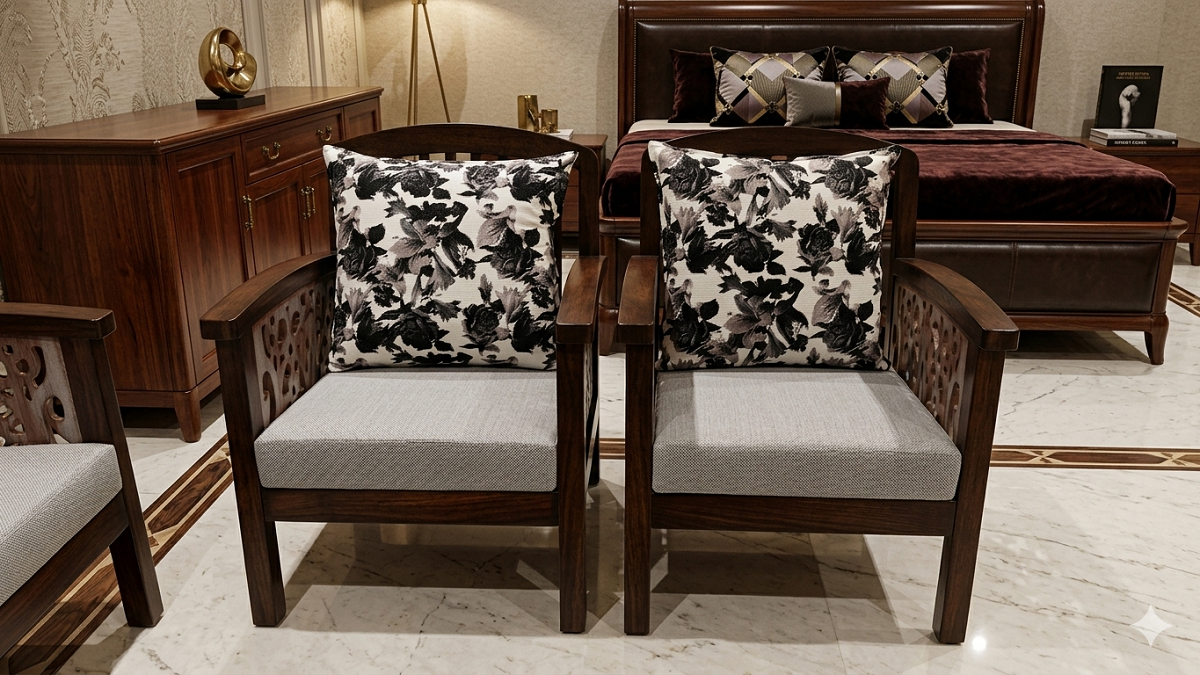
Hybrid Designs: Many contemporary sofas incorporate the jali concept directly into the sofa itself. This is seen in sofas with high, latticed backs that allow light to pass through, or in sofas with jali-style side panels. This integrated approach is perfect for open-plan spaces where a sofa needs to define an area without visually blocking it.
More Than Just a Pretty Face: Functional Benefits
The Sofa Jaali is a champion of multifunctional design. Here’s why it has become a staple for interior designers:
1. Defining Zones in Open-Plan Living
In modern homes where the living, dining, and kitchen areas often flow into one another, a sofa placed in the center can feel exposed. A jaali placed behind the sofa acts as a subtle “back wall,” creating a psychological boundary for the living area without closing it off from the rest of the home. It provides a sense of enclosure and security.
2. Solving the “Floating Jaali Sofa” Dilemma
One of the most common interior design challenges is the floating sofa—a sofa placed away from the wall. Without a visual anchor, the space can feel awkward. A Sofa Jaali solves this by creating a defined backdrop, making the seating area feel grounded, intentional, and complete.
3. Light and Airy Division
Unlike a solid partition or a full wall, a jaali allows light, air, and sound to pass through. This is crucial for maintaining the spaciousness of an open floor plan. The lattice work creates a visual connection between zones while still providing a sense of separation.
4. A Stage for Decor
The jaali itself becomes a display area. Many designs incorporate a small ledge or shelf at the top, perfect for displaying curated objects like vases, sculptures, framed photos, or trailing plants. The interplay of the objects against the patterned backdrop adds layers of visual interest.
5. Enhancing Acoustics
Believe it or not, a well-placed jaali can help with sound. In large, echoey open-plan spaces, a wooden or MDF screen can help break up sound waves, reducing noise reflection and creating a more acoustically comfortable environment.
Incorporating a Sofa Jaali: Key Considerations
If you are considering adding this element to your home, keep the following in mind:
-
Proportion is Key: The jaali should be at least as wide as the sofa, if not slightly wider. Its height should be just above the back of the sofa to be effective. A jali that is too short or too narrow will look like an afterthought.
-
Pattern and Flow: The intricacy of the jaali’s pattern should complement the rest of the room. A room with a lot of patterns (in rugs, cushions, or wallpaper) may benefit from a simpler, geometric jaali. A minimalist room, on the other hand, can handle a more ornate, statement-making piece.
-
Installation: Sofa Jaalis can be freestanding for flexibility, allowing you to change the layout of the room. Alternatively, they can be bolted to the floor or ceiling for a more permanent, built-in look that feels like an architectural feature.
-
Lighting: To maximize its impact, consider lighting. A downlight placed above the jaali will cast dramatic shadows of its pattern onto the sofa and the wall behind, creating a stunning visual effect, especially in the evening.
The Sofa Jaali is a testament to the enduring power of ancient design principles. It successfully translates the architectural intelligence of traditional jaalis—the balance of separation and connection—into a functional piece of modern furniture.