
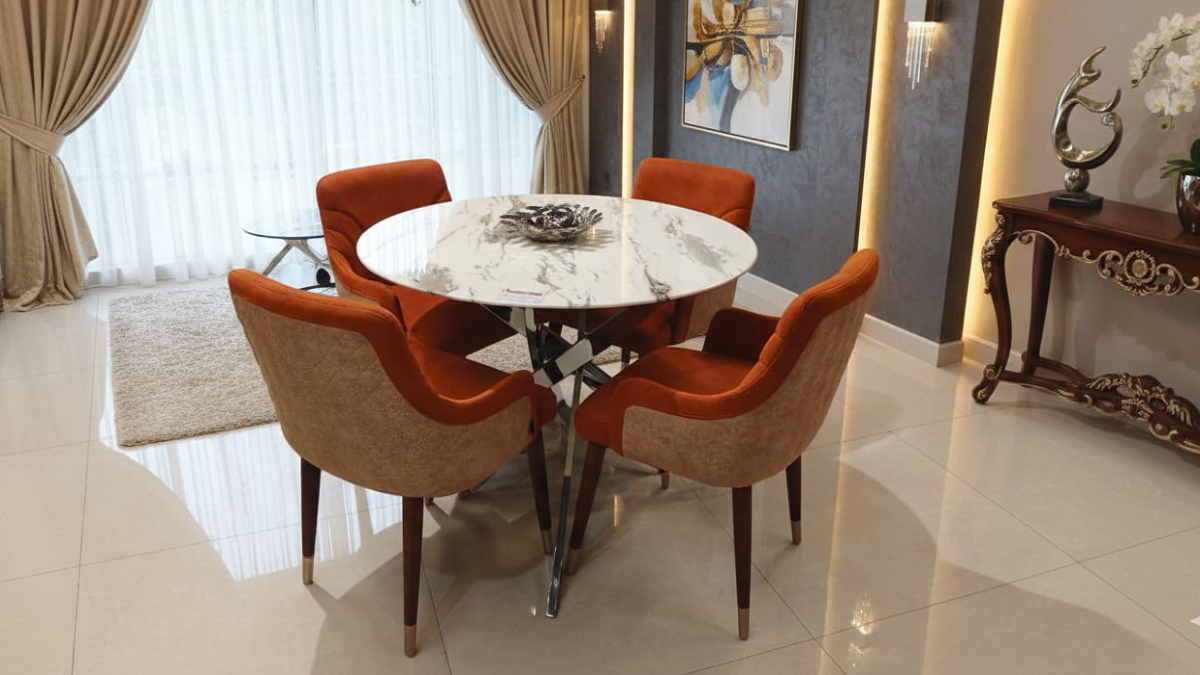
About this item
In a world of sharp corners and hierarchical seating, the round table stands as a quiet revolutionary. It is not merely a piece of furniture; it is a philosophy carved in stone—a powerful symbol of equality, unity, and collaboration that has shaped history, legend, and modern discourse.
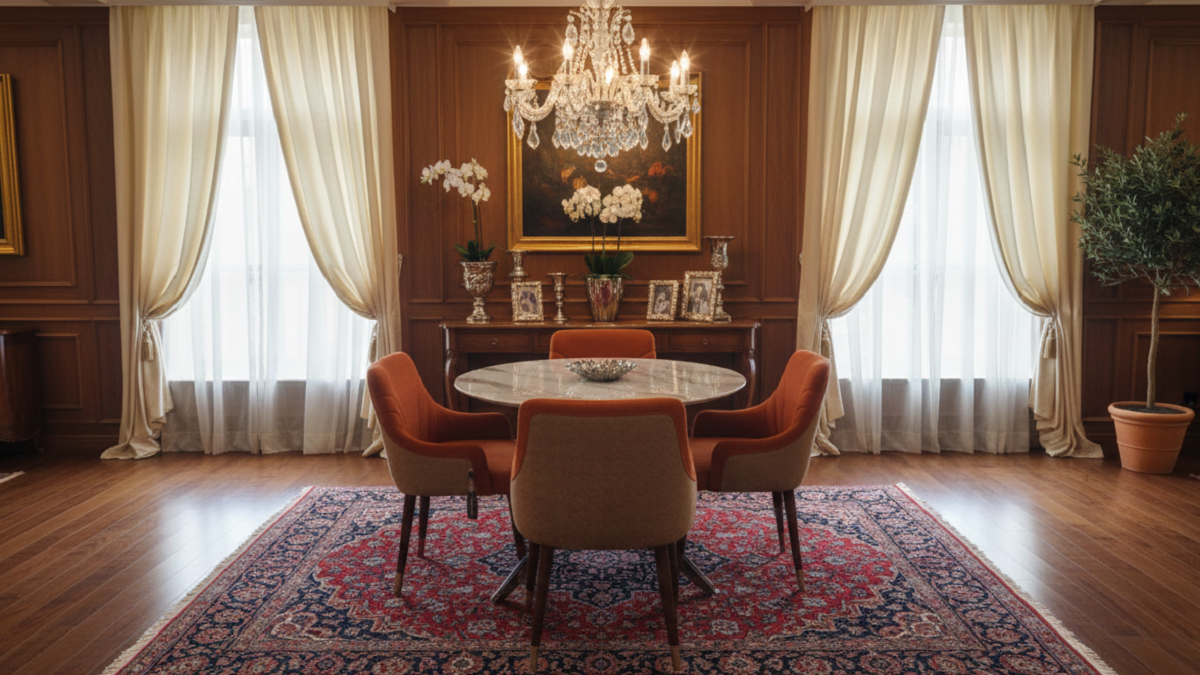 |
Furniture House Group
# Address: [G-5, Kamla Nagar, Bypass Road, Agra, Uttar Pradesh, 282004]
# Contact: [+91 9758273215]
# Website: [furniturehousegroup.com]
# Open: Monday – Sunday, 10:00 AM to 8:00 PM
# Close: Tuesday
——————————————
The Round Table: More Than Just Furniture
In a world of sharp corners and hierarchical seating, the round table stands as a quiet revolutionary. It is not merely a piece of furniture; it is a philosophy carved in wood, stone, or glass—a powerful symbol of equality, unity, and collaboration that has shaped history, legend, and modern discourse.
A Seat at the Legend
Its most iconic iteration resides in the mists of Arthurian legend. King Arthur’s Round Table was a masterstroke of political and social design. By removing the head of the table, it abolished the traditional hierarchy. No knight sat “above” another. Each had an equal voice, equal stature, and an equal share of responsibility in the quest for a just realm. The table itself became a character in the story—a physical manifestation of Arthur’s ideal of brotherhood and meritocracy. It promised that leadership was not about position, but about contribution.
The Geometry of Inclusion
The power of the round table lies in its geometry. A rectangle or square inherently creates sides, opposites, and ends. The round table has only one side. Everyone faces inward, toward a shared center. Eye contact is easier. Conversation flows without a natural “leader” intercepting. It discourages sidelined observers; participants are either in the circle or outside of it, making inclusion and exclusion visibly clear.
This shape fosters a different kind of dynamic:
-
Psychological Safety: Without a looming authority figure at the head, participants often feel more empowered to speak freely.
-
Collaborative Spirit: The circle is the shape of gathering, of huddling, of shared purpose. It naturally encourages consensus-building.
-
Fluid Leadership: In a true round-table discussion, leadership can shift based on expertise or perspective, not on title.
From Diplomacy to the Dining Room
The principle of the round table has transcended legend. In the 20th century, “round-table talks” became synonymous with conflict resolution and diplomacy. When opposing factions meet at a literal or metaphorical round table, they signal an intention to negotiate as equals, setting aside preconditions for open dialogue. It’s a format used in peace negotiations, corporate boardrooms seeking breakthrough ideas, and community forums aiming for genuine engagement.
On a more intimate scale, the round dining table is the heart of a home. Family meals, dinner parties with friends—the table ensures no one is stuck at the far end. The conversation is communal, the food is shared from the center, and the experience becomes cohesive. It is the antithesis of a linear, transactional meal.
The Modern Metaphor
Today, “round-table” is less about the object and more about the ethos. A virtual video call where every participant’s tile is the same size is a digital round table. A company that replaces corner offices with open circular workspaces is embracing the principle. It represents a shift from command-and-control to connect-and-collaborate—a vital approach for tackling complex, interdisciplinary problems from climate change to technological ethics.
The Inherent Challenge for the Round Table
Yet, the table is not a magic solution. True equality is not guaranteed by shape alone. A dominant voice can still overpower others. Social dynamics and unconscious biases can travel around the curve. The table facilitates equality, but it demands conscious practice from those seated around it—active listening, respect, and a willingness to share power.
The round table endures because it answers a deep human need for fair belonging. It is a promise etched in its very form: that every voice matters, that perspective is enriched by multiple viewpoints, and that the best solutions emerge not from a single head, but from a collective mind. In a fragmented world, it remains a potent symbol and a practical tool, reminding us that sometimes, the most powerful way to move forward is simply to sit down together, in a circle, and talk.